Automotive Parts Data Extraction and Management
Dor Peleg2 min read
Key facts
RILLOO built a web application that automatically extracts automotive parts data from PDF catalogs with Python and detects duplicate entries. The system provides indexed search with filters and runs on Google Cloud Platform.
- Industry
- Automotive
- Challenge
- Automotive parts information arrives mostly as PDFs that are hard to search and update by hand, which slows workflows and increases errors.
- Solution
- A web application that extracts part numbers, descriptions, specifications and pricing from PDFs with Python, detects duplicates, and offers indexed search with filters, hosted on Google Cloud Platform.
- Results
- Processes hundreds of pages in minutes instead of hours of manual copying
- Automated extraction reduces human errors
- A structured, duplicate-free parts database with fast search
- Technologies
- PythonGoogle Cloud Platform
Managing automotive parts data can be a complex task. Parts information often comes in various formats, especially PDFs, which are difficult to search and update manually. This challenge slows down workflows and increases the risk of errors. A web application that automates data extraction and simplifies management can transform how automotive businesses handle parts information.
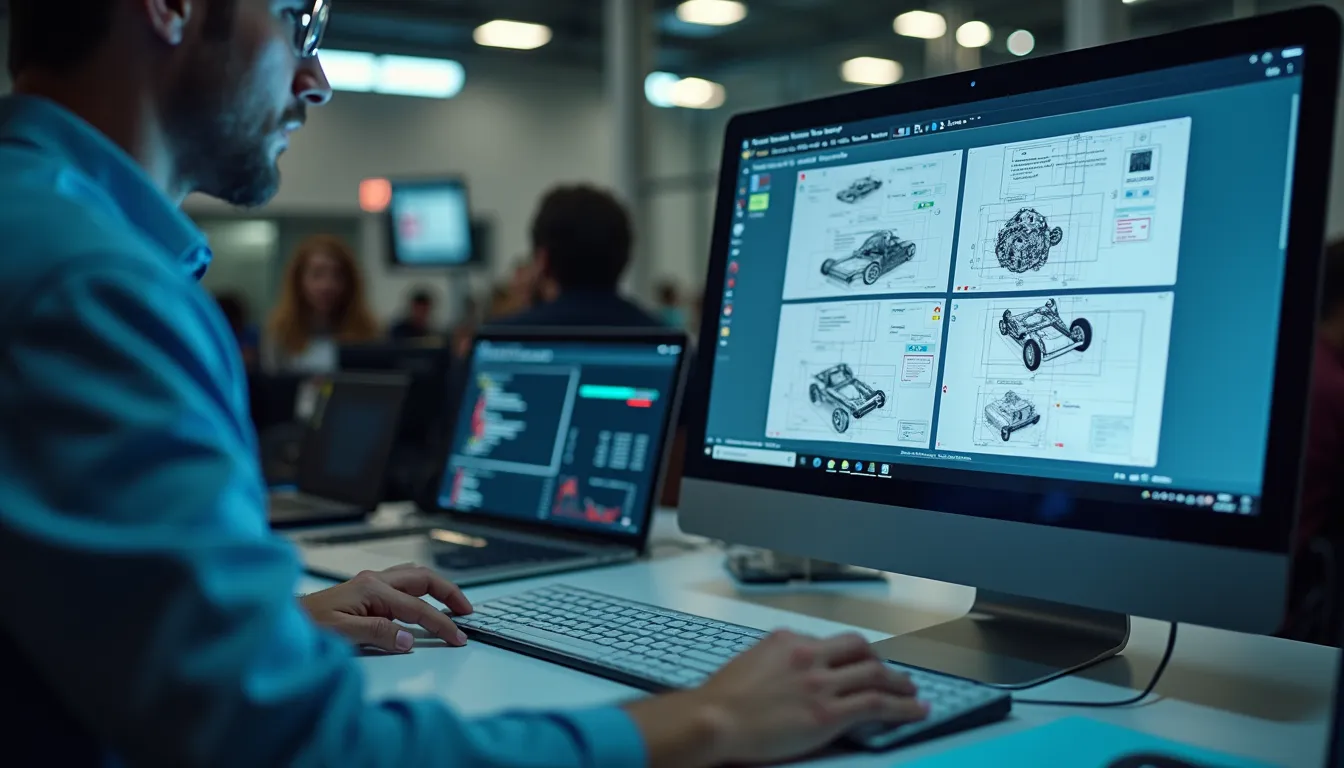
Automotive parts data extraction and management interface
Automating Data Extraction from PDFs
Automotive parts catalogs and manuals are frequently distributed as PDF files. Extracting data manually from these documents is time-consuming and prone to mistakes. The web application uses Python scripts to automatically extract relevant data from PDFs, including part numbers, descriptions, specifications, and pricing.
This automation reduces manual labor and speeds up the process of updating parts databases. For example, instead of spending hours copying data, the system processes hundreds of pages in minutes. The extracted data is then structured into a consistent format, making it easier to manage and analyze.
Handling Duplicate Data Efficiently
Duplicate entries are a common problem in parts databases. They cause confusion, inflate inventory counts, and complicate ordering processes. The application includes a duplicate detection feature that compares new data against existing records.
When duplicates are found, the system either merges the entries or flags them for review. This approach keeps the database clean and reliable. For instance, if two PDFs contain the same part with slightly different descriptions, the system identifies the match and prevents redundant entries.
User-Friendly Search Functionality
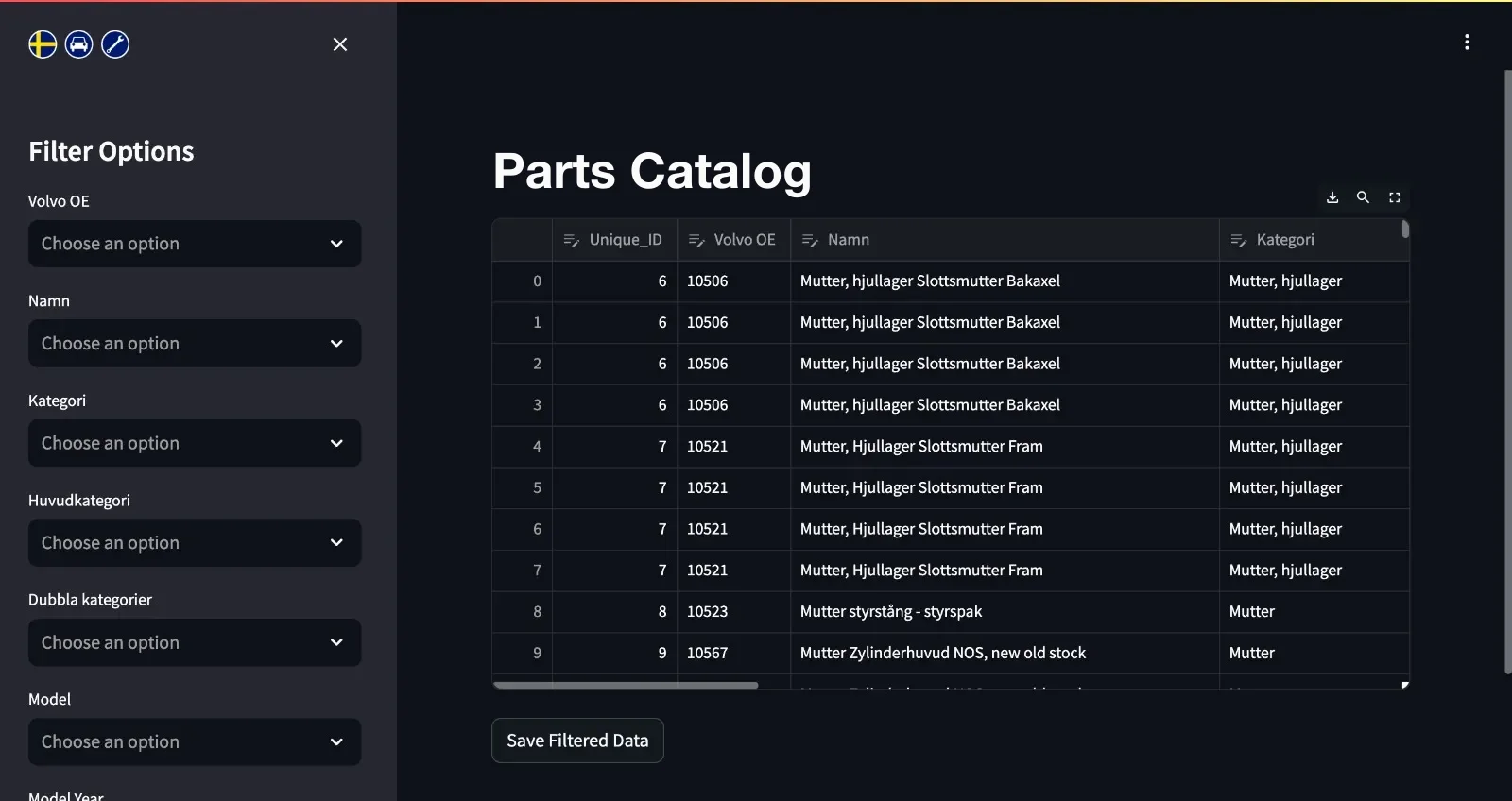
A key feature of the application is its search capability. Users can quickly find parts by entering keywords, part numbers, or specifications. The search engine indexes all extracted data, providing fast and accurate results.
The website interface is designed for ease of use, with filters and sorting options that help users narrow down their search. This functionality saves time for mechanics, sales teams, and inventory managers who need to locate parts quickly.
Benefits of the Web Application
- Improved accuracy: Automated extraction reduces human errors.
- Time savings: Fast processing of large volumes of data.
- Better data organization: Structured and duplicate-free database.
- Enhanced accessibility: Easy search and retrieval on a user-friendly platform.
By integrating Python and Google Cloud Platform, the application ensures scalability and reliability. Cloud storage and computing power allow the system to handle growing amounts of data without performance loss.
Next Steps for Automotive Businesses
Adopting automated data extraction and management tools can significantly improve operations. Businesses should evaluate their current processes and consider implementing solutions that reduce manual work and improve data quality.
Exploring cloud-based applications with strong search features will help teams access accurate parts information faster. This leads to better decision-making, smoother inventory management, and ultimately, improved customer service.