The Reality of Vibe Coding: Why AI-Generated Apps Fall Short in Real-World Production
Dor Peleg4 min read
Key takeaways
- Vibe coding tools like Loveable, Replit and Base44 turn natural language prompts into working prototypes, enabling fast idea validation at low upfront cost.
- AI-generated code often lacks optimization, such as efficient database queries, caching or rate limiting, so it may fail at scale.
- AI-generated code can introduce security risks, including hard-coded secrets, outdated libraries and missing input validation or authentication checks.
- Relying on AI generators and their hosting wrappers limits control over DevOps and backend logic, creating vendor lock-in.
- Vibe coding works best as a sketching tool; professional engineers are needed to refactor prototypes into scalable, secure, maintainable platforms.
The rise of AI-powered coding tools like Loveable, Replit, Base44 and others has sparked excitement among entrepreneurs and business owners. These platforms promise to turn natural language prompts into functioning apps almost instantly. This trend, sometimes called “vibe coding,” feels like magic—type a few sentences, and you get a working prototype. But behind the scenes, this magic has limits that become painfully clear when you try to build a serious, scalable business.
This post explores why vibe coding shines in early stages but struggles to deliver production-ready software. It breaks down the benefits and pitfalls from the perspective of a senior software architect and agency founder, aiming to help non-technical founders understand what to expect and how to plan accordingly.
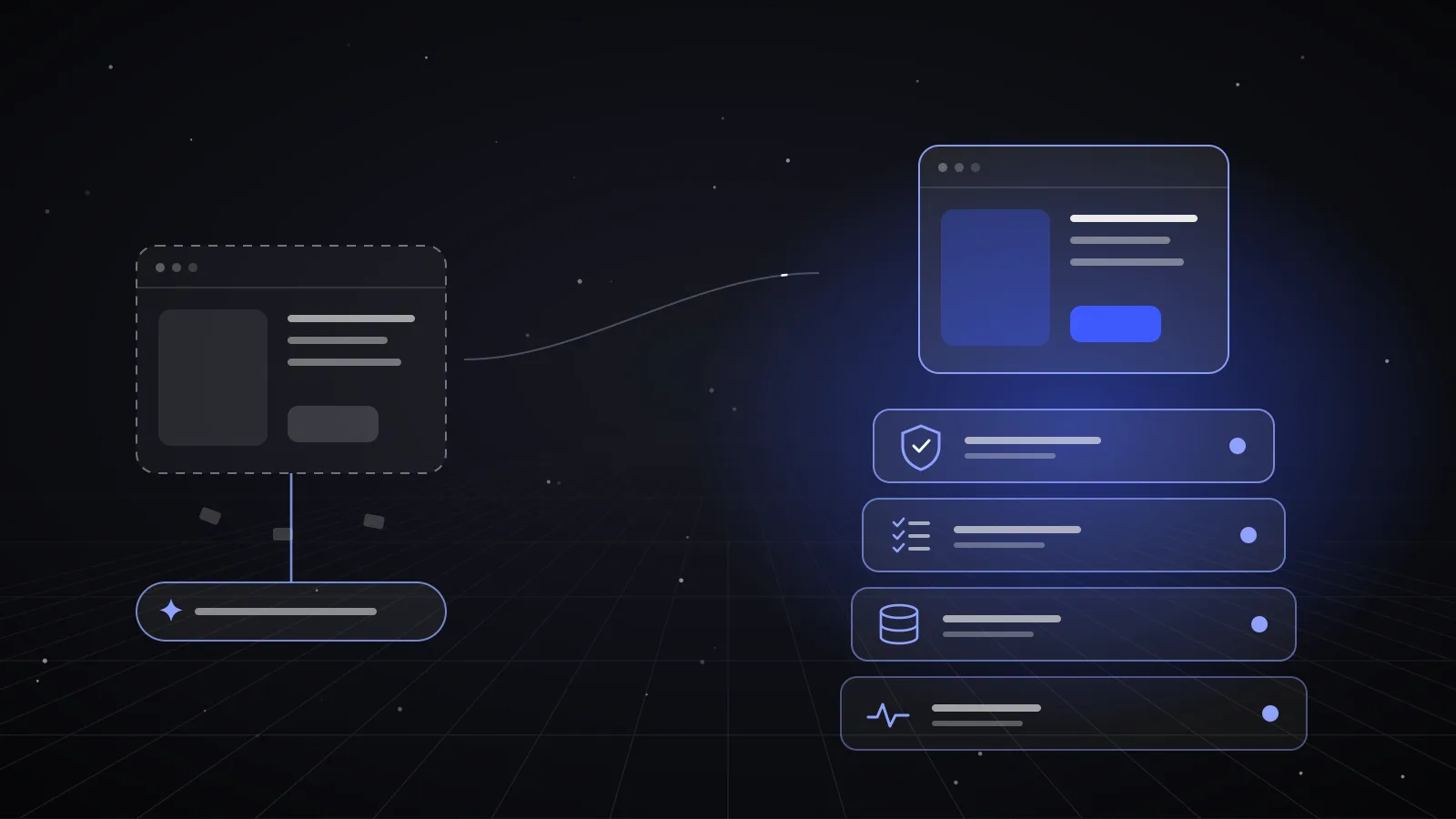
From a vibe-coded prototype to a production-ready app
What is vibe coding good for?
Vibe coding tools excel at rapid prototyping. When you want to test a new app idea quickly, these AI generators can produce a working UI and basic backend in minutes. This speed helps founders move from concept to demo without waiting weeks for a developer to write code.
Some key benefits include:
- Instant UI mockups: Generate user interfaces from simple prompts, allowing you to visualize the product early.
- Quick iteration: Modify prompts and see changes immediately, speeding up feedback cycles.
- Beta testing readiness: Build a minimum viable product (MVP) fast enough to share with early users and gather insights.
- Lower upfront cost: Avoid hiring a full development team during the initial “zero to one” phase.
For example, a startup founder might use Replit to create a simple task manager app in a few hours, then share it with friends or investors to validate the concept. This approach saves time and money compared to traditional development.
Why do AI-generated apps struggle to scale in production?
The honeymoon phase ends when you try to grow beyond a handful of users. AI-generated code often hits a “production wall” where it cannot support real-world demands. Here are the main reasons:
Scalability and Performance Issues
AI tools generate code that works for small-scale testing but lacks optimization. The code may:
- Use inefficient database queries
- Load unnecessary data into memory
- Lack caching or rate limiting
This means the app might handle 10 users fine but crash or slow down with 10,000 users. For example, an AI-generated chat app might freeze when many users send messages simultaneously because it does not implement proper concurrency controls.
No Control Over DevOps and Infrastructure
Vibe coding usually depends on managed hosting platforms that abstract away infrastructure details. This creates problems:
- You cannot customize CI/CD pipelines to fit your workflow.
- Auto-scaling rules and server configurations are fixed or hidden.
- Debugging production issues becomes harder without access to logs or metrics.
Losing control over deployment and infrastructure means you cannot fine-tune performance or reliability as your user base grows.

Server rack with blinking lights representing backend infrastructure
Security Risks from AI-Generated Code
AI models sometimes hallucinate code patterns that introduce security vulnerabilities:
- Hard-coded secrets like API keys or passwords appear in the code.
- Use of outdated or unvetted third-party libraries.
- Missing input validation or authentication checks.
Without a proper security audit trail, these risks can expose your app and users to attacks. For example, an AI-generated payment processing module might skip encryption steps, putting sensitive data at risk.
Lack of Backend Sovereignty
When you rely on AI generators and their hosting wrappers, you do not fully own your backend logic. This dependency means:
- You cannot easily migrate to another platform.
- Customizing business logic beyond the AI’s capabilities is difficult.
- Vendor lock-in limits flexibility and future growth.
This lack of sovereignty can stall your product’s evolution and increase long-term costs.
The Maintenance Nightmare: Spaghetti Code and Technical Debt
AI-generated code is often a patchwork of snippets without a coherent architecture. This leads to:
- Spaghetti code that is hard to read and debug.
- Difficulty adding new features or fixing bugs.
- Growing technical debt that slows down development.
For example, a feature request might require changes across multiple tangled files, causing delays and frustration for developers.
Should vibe coding be a sketching tool or a construction tool?
Vibe coding is best seen as a sketching tool for early-stage ideas. It helps you:
- Quickly visualize concepts.
- Test user flows.
- Validate market demand.
But to build a product with lasting value and equity, you need professional engineers to refactor the prototype into a well-architected platform. This involves:
- Designing scalable and maintainable codebases.
- Implementing secure and compliant infrastructure.
- Establishing DevOps pipelines for continuous delivery.
- Conducting thorough testing and code reviews.
Treat AI-generated apps as a starting point, not the final product.
Final Thoughts
It is important to note that this is a snapshot in time. The velocity of AI evolution is unprecedented, and the gap between ‘generated code’ and ‘engineered systems’ is narrowing every day. However, until these tools evolve from writing syntax to understanding complex system architecture, human engineering remains the bridge between a prototype and a sustainable business.